When Is the Best Time to Visit Fiji: Dry Season or Cyclone Season?
6 min read

For most first-time visitors, choose May to October: humidity is lower, rain is less frequent and island-day departures are easier to plan. Choose November to April only if lower accommodation prices matter more than predictability and you can tolerate humid afternoons, sudden showers and the possibility of disrupted boat plans. Fiji is warm enough for swimming throughout the year; the real choice is reliable weather versus price and quieter resorts.
The useful answer is west versus east
Fiji does not have one uniform forecast. Viti Levu’s mountain spine catches the prevailing south-easterly trade winds, making Suva and the eastern side wetter than Nadi, Denarau and the Coral Coast in the west. That distinction matters more than a generic rain icon. A wet-season stay based near Denarau can still contain long bright spells, while a hiking itinerary around Suva needs more tolerance for rain even in the drier months.
Tourism Fiji defines the wet season as November through April and the dry season as May through October. It gives typical dry-season days as cooler and sunnier, with average rainfall 50–75% below the wetter months. Those are climate patterns, not a promise for your week: tropical showers can be short and local.
May to October: easiest, not automatically cheapest
This is the simplest period for a holiday built around boats, beaches and several prepaid activities. Lower humidity makes full days ashore more comfortable, and clearer underwater visibility is one reason Tourism Fiji highlights the period for divers. July and August are the coolest months, but daytime conditions remain warm; a light layer is more relevant after sunset or on a breezy return crossing than heavy clothing.
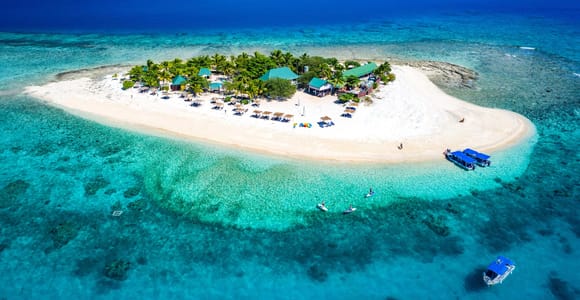
The compromise is demand. The dry season overlaps with school-holiday travel, so popular resorts and well-reviewed island trips can fill earlier. If your priority is the Mamanuca Islands, reserve the key sea day before filling the rest of the calendar. The eight-hour Fiji: Monuriki, Mana Sand Bar & Snorkelling Cruise costs €120, has 4.8 stars from 718 reviews, and combines Monuriki, Monu Cove and the Mana sandbar rather than spending the day at one beach club.
Check availability for the Monuriki, Mana Sand Bar & Snorkelling Cruise
November to April: value with a real weather trade-off
The wet season brings warmer, more humid days and often short afternoon downpours. It does not mean continuous rain, but it does make a tightly packed sequence of non-refundable outdoor plans a poor design. Leave one flexible day around the activity you care about most and avoid arranging an onward flight immediately after a weather-sensitive boat return.
This is also Fiji’s tropical-cyclone season. A cyclone is not an expected feature of every trip, but its consequences are large enough that the risk should shape the booking: choose changeable accommodation and flights, read the operator’s cancellation terms, and follow the Fiji Meteorological Service and local instructions if a system develops. A long-range weather app cannot tell you months ahead whether your dates will be affected.
Which month should you actually choose?
May and October are the most attractive compromises for travellers who want the drier pattern without centring the trip on the busiest winter-holiday weeks. June to September suits a schedule dominated by diving, snorkelling and cruises. November to April can suit a resort-led holiday where a rainy afternoon is an inconvenience rather than a ruined itinerary.
Do not book the season and forget the geography. Put weather-sensitive Mamanuca days near the start of a Denarau stay, keep an alternative land day, and treat any operator decision to cancel as a practical safety decision rather than lost value. For a first Fiji visit built around the sea, my clear choice is May to October, with the Monuriki cruise booked early and at least one spare day around it.